Due diligence
Make the property story match the records.
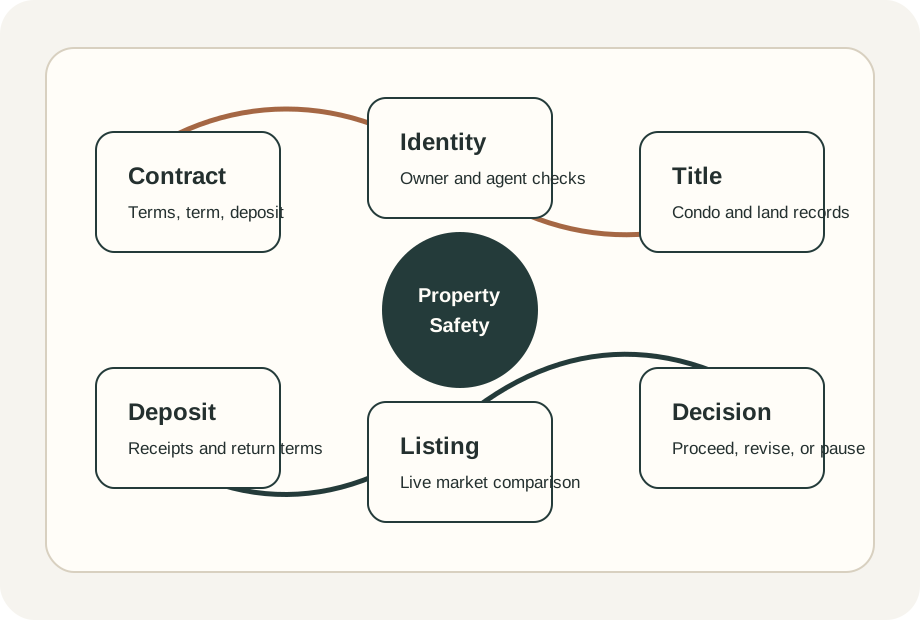
Use due diligence to confirm who can sign, what is being offered, whether the property status is clear, and which risks should be reviewed before payment.
This website is not a law firm and does not provide legal advice. It helps organize documents and questions before independent professional review.
Start with identity and authority
Property due diligence in Thailand begins with a simple question: does the person offering the deal have the authority to sign and receive money? For rentals, this means confirming whether the landlord, property manager or agent can actually bind the owner. For purchases, it means confirming the seller, company representative or attorney-in-fact has the right to sell. A polished listing, old website history or friendly chat does not answer that question. The paperwork must connect the person, the property and the bank account.
Ask for identification that matches the contract or reservation document. If a Thai owner signs directly, the name should align with the ownership document or official record. If a company owns or manages the property, the signer should be named in company documents or supported by a board resolution, power of attorney or management agreement. If an agent is involved, clarify whether they represent the owner, the buyer, the tenant or only introduce parties. Keep a copy of the agent agreement or written authorization when possible.
Payment instructions are part of due diligence. A deposit requested to a personal account that does not match the owner, manager or signed agreement is a risk signal. Sometimes there is a legitimate explanation, but it should be written and supported. For a reservation fee, ask whether it is refundable, what conditions trigger forfeiture, what documents will be produced next and whether the amount is credited against rent or purchase price. The safest transaction trail is boring: named parties, written terms, matching account details and receipts.
Title, land records and tabien baan context
For purchase due diligence, the land or condominium record is central. In Thailand, buyers often hear terms such as chanote, title deed, land office search, foreign quota and transfer registration. The practical point is that the title record should match the property being sold and should show who has legal authority to transfer it. It may also reveal mortgages, leases, servitudes, restrictions or other registered interests. A buyer should not rely only on a brochure, booking form or copy of a unit plan.
For houses and land, review the title type, plot boundaries, registered owner, access road and any encumbrances. For condos, review the unit record, foreign quota status, project registration, common area obligations and juristic person information. The tabien baan, or house registration book, can help identify address and registration context, but it is not the same as ownership proof. Treat it as one supporting document, not the document that proves the right to sell.
The old tabian baan topic is worth keeping separate from title review because foreign buyers sometimes overread it. A blue or yellow house book may show who is registered at an address, while the land office or condominium record shows the ownership and transfer position. If a seller presents a tabian baan as the main proof, ask for the title document, seller authority, unit details and juristic office confirmation before treating the deal as verified.
When a transaction involves a company structure, leasehold structure or long-term right, the due diligence scope increases. Review company shareholders, directors, financial liabilities, landholding purpose and transfer limitations. For leasehold, confirm the term, renewal language, registration requirements and whether the lease binds future owners. For off-plan projects, check building permits, environmental requirements when relevant, construction progress, escrow or staged payment terms, and what happens if delivery is late.
Condo juristic office and project checks
The condo juristic office can be a useful reality check. Before renting or buying, ask about building rules, renovation restrictions, pet policy, short-term rental restrictions, parking rights, debt attached to the unit, common fees, sinking fund obligations and move-in procedures. A unit can look fine in photos while the building rules make the intended use impossible. For example, a tenant may plan to work from home with guests, a family may need pet approval, or an investor may assume short stays are permitted when the building rules say otherwise.
For resale condos, ask whether common fees are current and whether a debt-free certificate will be available for transfer. For rentals, ask whether the owner has outstanding obligations that could affect access cards, parking or building services. If the unit has been renovated, check whether approvals were needed for structural, plumbing, electrical or balcony changes. Unapproved modifications can become the buyer's or tenant's practical problem even if they were completed before the current deal.
Project reputation also matters. Review whether the project is completed, who manages it, whether there are recurring disputes, what facilities are actually operating and whether maintenance appears consistent. Online reviews are useful but incomplete; combine them with a site visit, juristic office questions and comparison against similar buildings in the same area. If the price is far below the market, the discount may reflect urgency, condition, quota limits, building debt, poor management or legal complexity.
Due diligence before money moves
Build the review around stages. Before a small booking payment, verify identity, property existence, basic authority, refund terms and payment recipient. Before a larger deposit or reservation, review the draft contract, title or ownership evidence, building rules and conditions for cancellation. Before final transfer or move-in, confirm original documents, handover condition, meter readings, keys, access cards and all outstanding charges. Each stage should reduce uncertainty before the next payment is made.
Do not ignore language. If the contract is in Thai and English, ask which version controls if there is a conflict. If you cannot read Thai, get a reliable translation before signing. If key promises are only in chat, put them into the formal document or an addendum. Common examples include furniture included, repair promises, parking, internet speed, pet approval, deposit return date, foreign quota confirmation and responsibility for transfer taxes or fees.
Many Thai property problems are not dramatic legal traps; they are mismatches discovered too late. The photos may show a renovated room while the building has unpaid common fees, the seller may be willing but not authorized, the agent may know the price but not the title position, or the reservation form may omit refund rules. Treat every mismatch as a due diligence item until the documents, building office and payment trail tell the same story.
Good due diligence does not require paranoia. It requires a written checklist, matching documents and patience when something does not line up. The best warning signs are usually mundane: names do not match, account details change, documents are delayed, pressure increases, fees are introduced late or the other side refuses to answer ordinary questions. When those signs appear, slow the transaction down. A property can still be legitimate, but the risk should be understood before the buyer or tenant is financially committed.