Rental contract checklist
Read the lease like a risk document.
Before signing a Thailand rental contract, check the named parties, unit details, payment schedule, deposit return terms, maintenance duties and early-exit conditions.
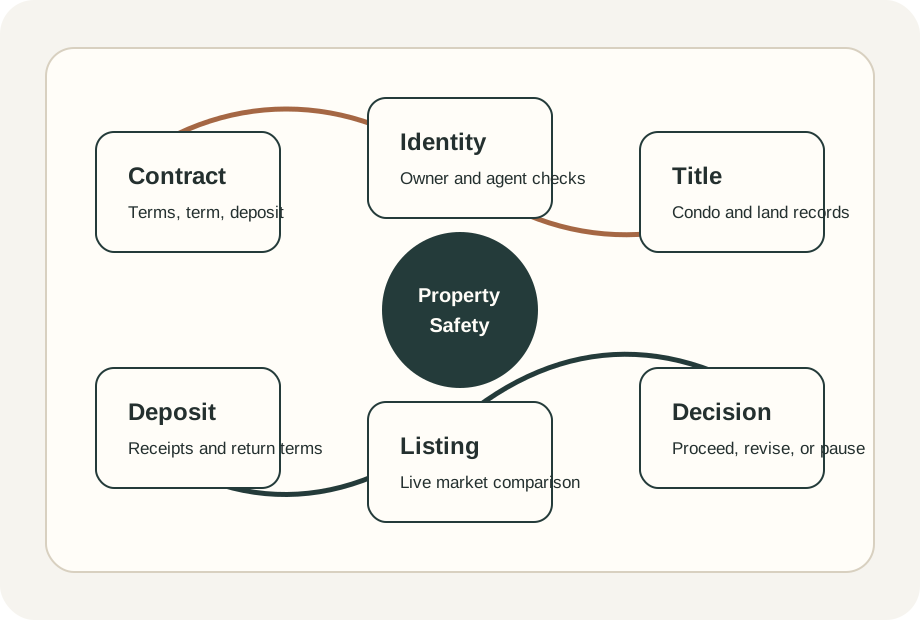
This website is not a law firm and does not provide legal advice. Use this checklist to prepare questions and decide whether independent professional review is needed.
What to verify before signing
A Thailand rental contract is not just a payment schedule. It is the document that decides who can live in the unit, what condition must be returned, which charges are allowed, how notices are delivered and what happens if a tenant needs to leave early. Many disputes start because the offer looked simple in chat, but the signed agreement gave the landlord or agent broad discretion over deductions, repairs or move-out timing. A careful review keeps the commercial terms, the property condition and the practical handover process in the same written record.
Start with the named parties. The contract should identify the landlord or authorized representative, the tenant, the exact unit number, the building name and the address. If an agent signs or collects money, ask what authority they have and keep a copy of the authorization or management appointment. For condo rentals, the person collecting rent should be able to explain whether the owner, juristic office or property manager is responsible for building registration, move-in forms, access cards and common area rules. If the contract names one party but payment instructions point to another person, resolve that mismatch before transferring the deposit.
Next, make the unit description concrete. A good lease references the room number, bedroom count, furniture list, appliances, internet router, keys, access cards and parking entitlement. Attach photos or an inventory checklist at handover. The checklist should record wall marks, bathroom fixtures, air conditioners, kitchen equipment, meters, balcony doors and any existing water damage. This is tedious for a few minutes, but it prevents an argument weeks later about whether a scratch or broken appliance existed before move-in.
Money terms and hidden charges
Rent should be stated in Thai baht with a clear due date, payment method and receipt process. If the rent is quoted monthly, check whether it includes internet, common area fees, pool or gym access, cleaning, pest control, parking, water and electricity. Some short and medium term rentals use government utility rates; others charge a marked-up unit rate. Both models may be disclosed, but the contract should be explicit. If the lease uses a private electricity rate, write down the rate per unit, meter reading procedure and who can inspect the meter. Utility ambiguity is one of the easiest ways for a cheap listing to become expensive after move-in.
Deposit language deserves separate attention. The agreement should state the deposit amount, what it secures, what deductions are permitted and when the balance must be returned. Look for broad phrases such as "any cost deemed necessary" or "deposit non-refundable" when the advertised deal said refundable deposit. A balanced clause usually separates unpaid rent, unpaid utilities, damage beyond fair wear and cleaning or key replacement. It should also require a written explanation and evidence for deductions. If the deposit is more than one or two months of rent, be extra strict about receipts and return timing.
Fees can sit outside the headline rent. Ask about internet setup, bedding, end-of-stay cleaning, building move-in fees, juristic office forms, water delivery, parking stickers, extra occupants, pets, smoking, late check-in and bank transfer charges. If these fees are real, list them before signing. If they are only mentioned verbally, they are harder to challenge later. The goal is not to remove every fee; the goal is to prevent surprise charges after the tenant has already paid and moved in.
Maintenance, access and early exit
Maintenance clauses should divide ordinary tenant care from owner-level repairs. Tenants usually handle daily cleanliness, replacing small consumables and reporting problems quickly. Owners commonly handle structural issues, major appliance failure, plumbing, air conditioner servicing caused by normal use and building defects. The contract should explain how repairs are requested, who approves vendors, whether the tenant can arrange urgent repairs, and how costs are reimbursed. Without this, a tenant may pay for a repair that should have been the owner responsibility, or a landlord may delay a repair because the process is vague.
Access rights also matter. Landlords, agents and technicians should not enter without reasonable notice except for emergencies. The lease can allow inspections, viewings near the end of the term and repair visits, but the notice period and communication channel should be clear. If the property is in a condo, check building rules for guests, short-term stays, pets, smoking, balcony use, parking, pool access and quiet hours. A tenant can be in breach of building rules even when the private lease says nothing about them.
Early termination is where many rental agreements become expensive. If the tenant leaves before the end date, does the landlord keep the full deposit, one month, unpaid rent until replacement, or a fixed penalty? Can the tenant assign the lease or help find a replacement? What happens if the owner sells the unit, the building has major works, or the tenant must leave Thailand unexpectedly? A clear early-exit clause is especially useful for digital nomads, families on school-year schedules and tenants waiting for visa or work permit decisions.
Older leasing-property checklists for Thailand focused on the same practical point: the lease should describe the right being granted, not just the monthly rent. Check whether the tenant receives exclusive possession of the unit, shared use of facilities, parking, storage, internet equipment and building access. If a landlord promises a long stay, renewal option or special use such as home office, pet occupancy or subletting, put that promise into the written lease rather than leaving it in a chat thread.
Handover and practical records
Do not treat the handover as a formality. On move-in, record the date, keys, access cards, remotes, furniture, appliance condition and meter readings. Take wide photos and close-ups, then store them with the contract, transfer slips and chat confirmations. On move-out, repeat the same process before returning keys. Ask for a written checkout list and a date for deposit return. If the landlord wants deductions, ask for itemized reasons, photos, receipts or invoices. A calm record is more useful than a long chat argument.
For longer rentals, review renewal rules before the lease expires. Some agreements renew automatically unless notice is given; others require a new contract and new deposit receipt. If the rent can increase, the formula or notice period should be written. If the tenant intends to stay, keep renewal discussions in one written thread and confirm the final terms. If the tenant intends to leave, send notice in the method required by the contract and keep proof of delivery.
A contract review cannot remove all risk, but it can make the risk visible before money changes hands. Compare the written lease with the listing, the chat, the condition of the unit and the building rules. If something important is missing, ask for a written amendment before signing. If the other side refuses to write a key promise into the agreement, treat that refusal as information. It may still be a workable rental, but it is not the same deal that was advertised.